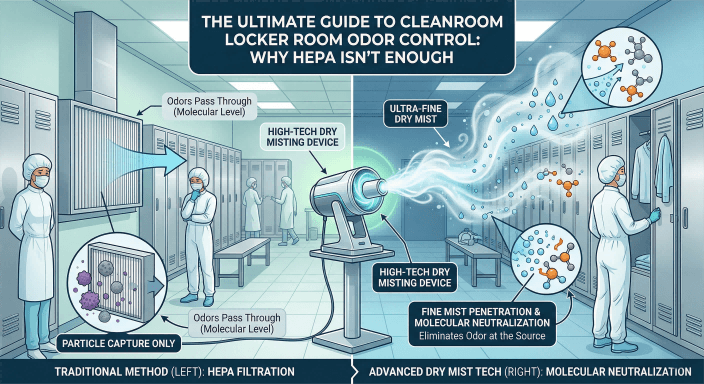
The Ultimate Guide to Cleanroom Locker Room Odor Control (Why HEPA Isn’t Enough)

If you’ve ever spent a shift suited up in a full Tyvek cleanroom gown, you already know the problem. A Reddit thread from a semiconductor fab worker put it plainly: “We can’t wear deodorant, we’re sweating through multiple gowning layers, and the locker room smells absolutely awful by end of shift.” It’s a complaint you … Read more

How to Stop Ground Puddling and Slippery Floors in MSW Transfer Stations

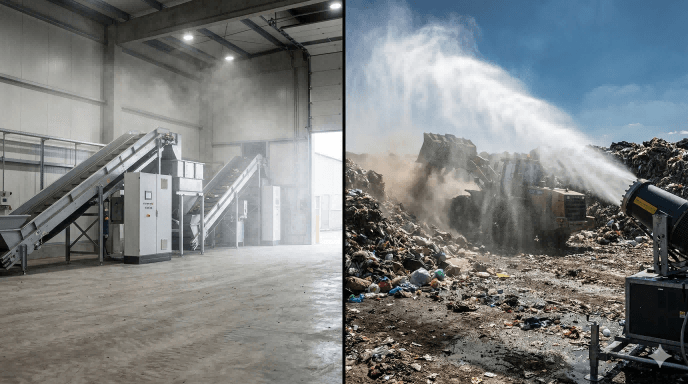
Wet floors in MSW transfer stations are not an inevitable facility norm. They are a predictable engineering failure. Specifically, the root cause is uncontrolled droplet size and gravitational settling. Therefore, standard systems cause puddling. Implementing precise dry mist odor control corrects this aerodynamic flaw. Control the droplet size to <1μm. Consequently, you fix the floor. … Read more

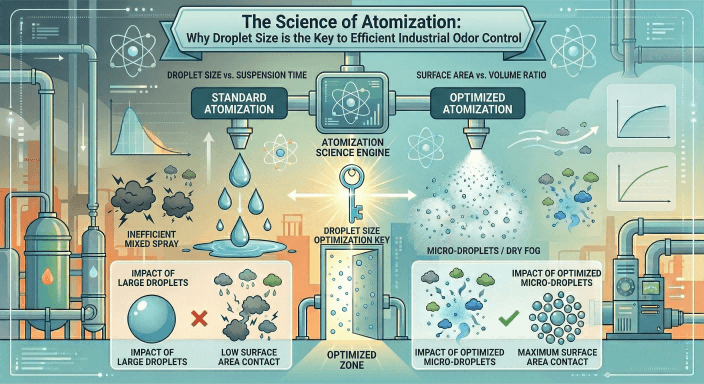
The Science of Atomization: Why Droplet Size is the Key to Efficient Industrial Odor Control

The Science of Atomization

Industrial facilities often fall into a common trap when dealing with odor emissions. They assume that simply spraying deodorizing agents will solve the problem. Yet many plant managers discover that despite investing in expensive chemicals, odors persist. Worse, they face secondary issues like slippery floors and equipment corrosion. The truth is, the “ultimate code” to … Read more

Dry Fog vs. High-Pressure Misting: Choosing the Right Odor Control for Waste Transfer Stations

Dry Fog vs. High-Pressure Misting: Choosing the Right Odor Control for Waste Transfer Stations

The Real Challenge at Waste Transfer Stations Walk into a waste transfer station and you understand immediately. The smell hits first. Then the dust. And if the bay doors are open, the wind carries both straight past whatever odor barrier you thought you had. This isn’t a mild nuisance. Waste transfer stations are one of … Read more

Industrial Odor Management Guide 2026: Selecting the Right Odor Control Solutions for Your Facility

The Ultimate Guide to Industrial Odor Control Solutions: Technologies, Selection, and Compliance

The Hidden Cost of Industrial Odor: Why Facilities Can No Longer Afford to Wait Every plant manager knows the moment. A complaint from a neighboring community. A regulator’s visit. An OSHA citation citing hydrogen sulfide concentrations above permissible exposure limits. Industrial odor control solutions are no longer a discretionary line item — they are an … Read more

The Ultimate Guide to Wastewater Treatment Odor Eradication

The Ultimate Guide to Wastewater Treatment Odor Eradication

Wastewater smells. That’s unavoidable. But left unmanaged, those smells become far more than a nuisance. Wastewater odor removal is the process of preventing, neutralizing, and eliminating foul-smelling gases from sewage systems and treatment facilities. It protects worker health. It shields nearby residents from persistent odor complaints. And it keeps facilities compliant with environmental regulations. This … Read more

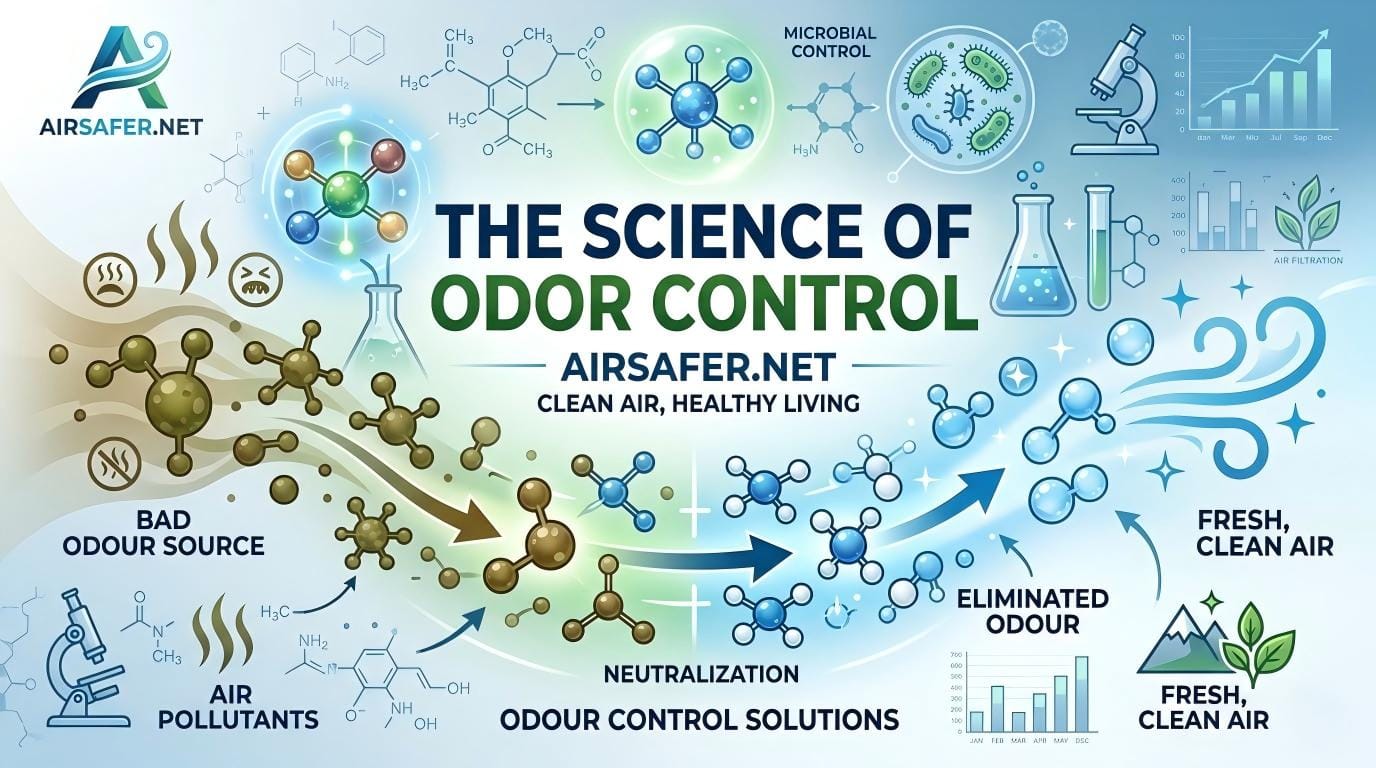
The Science of Odor Control: From Molecular Neutralization to Nano Dry Fog Technology

Odor control gets talked about like a cosmetic issue. Most of the time, it is really a chemistry problem with an air-distribution problem sitting right beside it. Bad smells come from volatile compounds released into the air. Those compounds move with humidity, surfaces, airflow, and temperature, and they keep circulating until something actually removes, breaks … Read more

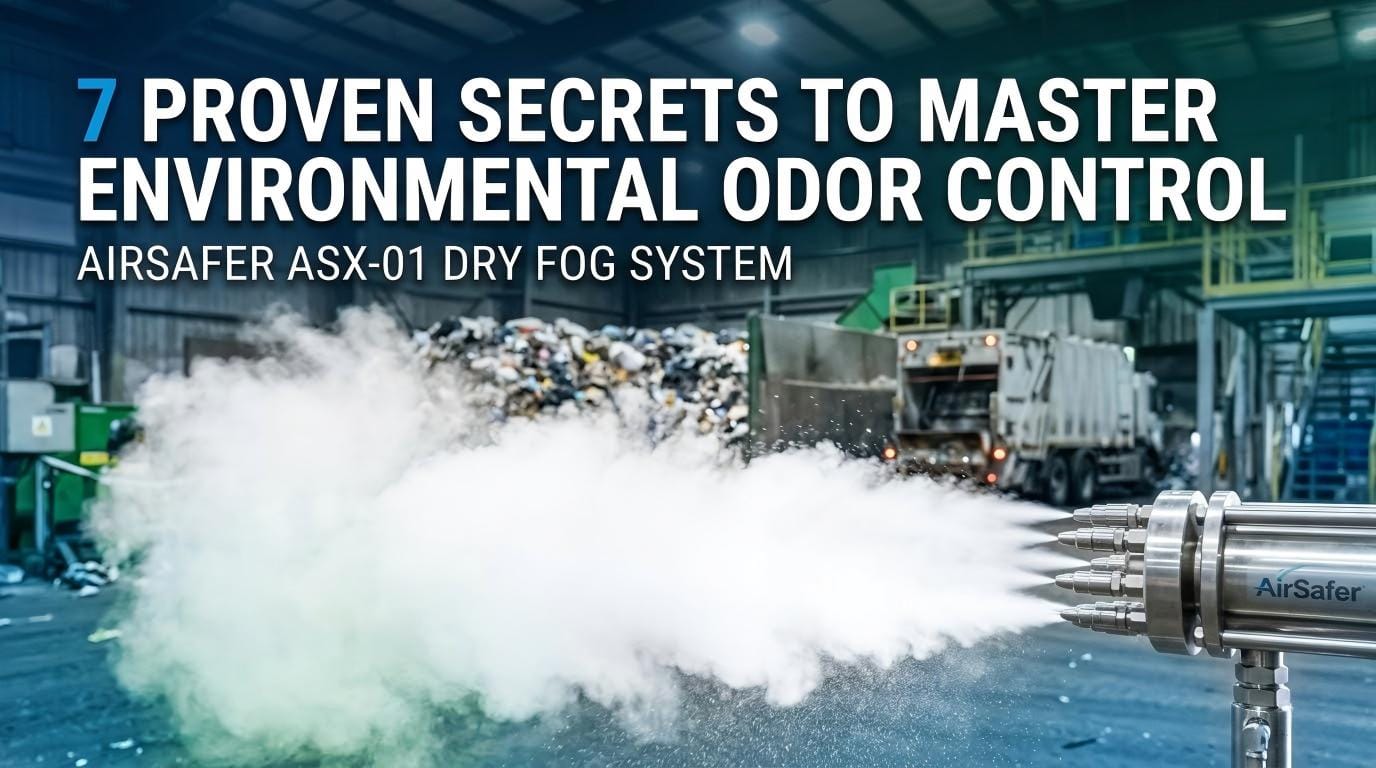
How to Master Environmental Odor Control via ASX-01

AirSafer ASX-01 Dry Fog System spraying a fine neutralizing mist in an industrial waste facility for effective environmental odor control

In the modern industrial landscape, environmental odor control has shifted from a “nicety” to a strict regulatory necessity. From municipal wastewater plants to massive chemical manufacturing hubs, the ability to neutralize malodors effectively determines a company’s standing with both the law and the local community. Consequently, as urban areas expand closer to industrial zones, traditional … Read more